U.S. Presidential election campaigns are awesome! For some the permanent campaign in American politics is tiresome, expensive, and makes a mockery of democracy. I'm not in that camp. American presidents don't always work out well, but getting to the White House means going through the toughest job interview process on the planet. The gig itself isn't for the faint of heart, so it's no surprise that the process for getting there is equally rough.
Hillary Clinton's campaign faces a growing set of problems that have little to do with challengers from either party. Many, in fact, are own goals. Back in April, I wrote a post about Hillary Clinton's announcement that she was going to make another run at President in 2016 (Link). I will take the opportunity to gloat a little and suggest that you revisit the list of challenges that the 2016 version of the Clinton campaign would face (see points 3, 4 and 6, in particular). Hillary Clinton's campaign is doing too much explaining. And, as President Reagan once said, "if you're explaining, you're losing."
It's often said of sausage that you never really want to know how it's
made. The same cannot be said about policy. What goes into the
policy-sausage is as important as the policy-sausage itself, especially if it turns out badly.
There is a fantastic piece by Karen DeYoung in today's Washington Post about the inner workings of the Obama Administration's National Security Council (linked here). It describes bureaucratic bloat, indecision, sketchy inter-agency coordination, infighting, and competition, and an all too frequent emphasis on process that has often generated more paralysis than meaningful policy; foreign policy sausage-making at its finest.
This past Friday (July 31) was to have marked the completion of the Trans Pacific Partnership (TPP), a signature effort for a President that I might best describe as agnostic about trade liberalization, but nevertheless a critical piece of his foreign policy agenda. Well, it didn't happen. Why? Canadian diary cows.... or more specifically, the heavily protected farmers that raise them.
Rumors have evidently been swirling in Washington for several days that President Obama is about to spike the Keystone XL pipeline project. One source of these rumors is Senator John Hoeven (R-ND), a key supporter of the pipeline project and not exactly one of the President's staunchest supporters. I would normally dismiss Senator Hoeven's comments yesterday on the Senate floor as just another example of the daily litany of complaints about Obama made by Republican lawmakers in the well of the House or Senate. However.....
What Does Hillary Know?
Hillary Clinton was asked specifically about Keystone XL while on the campaign trail in New Hampshire yesterday. Asked whether she supports or opposes the project, she hedged:
If it’s undecided when I become president, I will answer your
question. This is President Obama's decision.
I'm not going to second-guess him.
At first blush, this looks like a terrible bit of fence-sitting by Secretary Clinton. As she acknowledges, she was Secretary of State when the entire approval process for this project began. For some, this looked like a classic Clinton-esque fudge at an early stage of a presidential campaign. Yet, if she happens to be privy to the President's thinking about the project (not unlikely), her "hedge" actually comes across a little differently. In short, if Obama spikes the project, it will no longer be undecided if and when Hillary Clinton assumed office. My spidey senses are tingling....
Obama Really IS Serious About Climate Change
There are numerous posts on this blog in which I argue President Obama is pretty serious about having climate change be among his presidential legacies. Moreover, he has unambiguously signaled repeatedly that he intends to take action on climate change whether the Republican controlled Congress wants to go along with him or not. If the President spikes Keystone during the August Congressional recess, critics will howl that he just completed a nuclear deal with Iran that, if approved, could lift sanctions on Iranian oil exports resulting in 2 million additional barrels on a market that's already over-supplied--- that's not very friendly to the climate, is it?
And Canada? How about its position heading into Paris (COP 21)? For years, Canada has conveniently hidden behind American inaction on climate change by saying that it would be detrimental to the economy for serious action that would put Canadian firms at a competitive disadvantage relative to their American counterparts. The Harper Government proudly touts initiatives with the United States like the "Clean Energy Dialogue" as components of their climate change strategy. Yet, Canada is truly an international laggard on climate change and has, in my view, squandered opportunities to work collaboratively with its North American neighbors to build at least a little credibility on the file (more here and here).
If Canada Won't Do It, Perhaps Obama Will?
All of this leads me back to rumors that Obama might spike Keystone XL. Prime Minister Harper has given President Obama little political cover to approve a pipeline project America may not need for the foreseeable future. Energy markets have been turned upside down by the advent of widespread use of fracking and directional drilling to new supplies. Yet, Keystone XL has been about far more than oil or simply a piece of infrastructure for a very long time. For good or for ill, a pipeline has become a symbol of climate change. Moreover, many believe that approval of the project would simply hasten the rapid expansion of oil sands projects widely believed to be among the world's dirtiest. The President seems unwilling to approve a project that undermines his objectives for America's contribution to climate change mitigation. It's not an extra-territorial exercise of American power, as some may howl, but the effect may turn out to be the same.
Some Humble Pie: I have periodically argued here that Keystone is essentially a piece of infrastructure that will eventually be approved. I also argued that it would be punted to the next president's desk for decision sometime after January 2017 (see post). I'm wrong on both. Keystone is more than just infrastructure (although to be fair, I do acknowledge that too). It also looks like there may not be a project for the next president to approve, especially if that president happens to be Hillary Clinton.
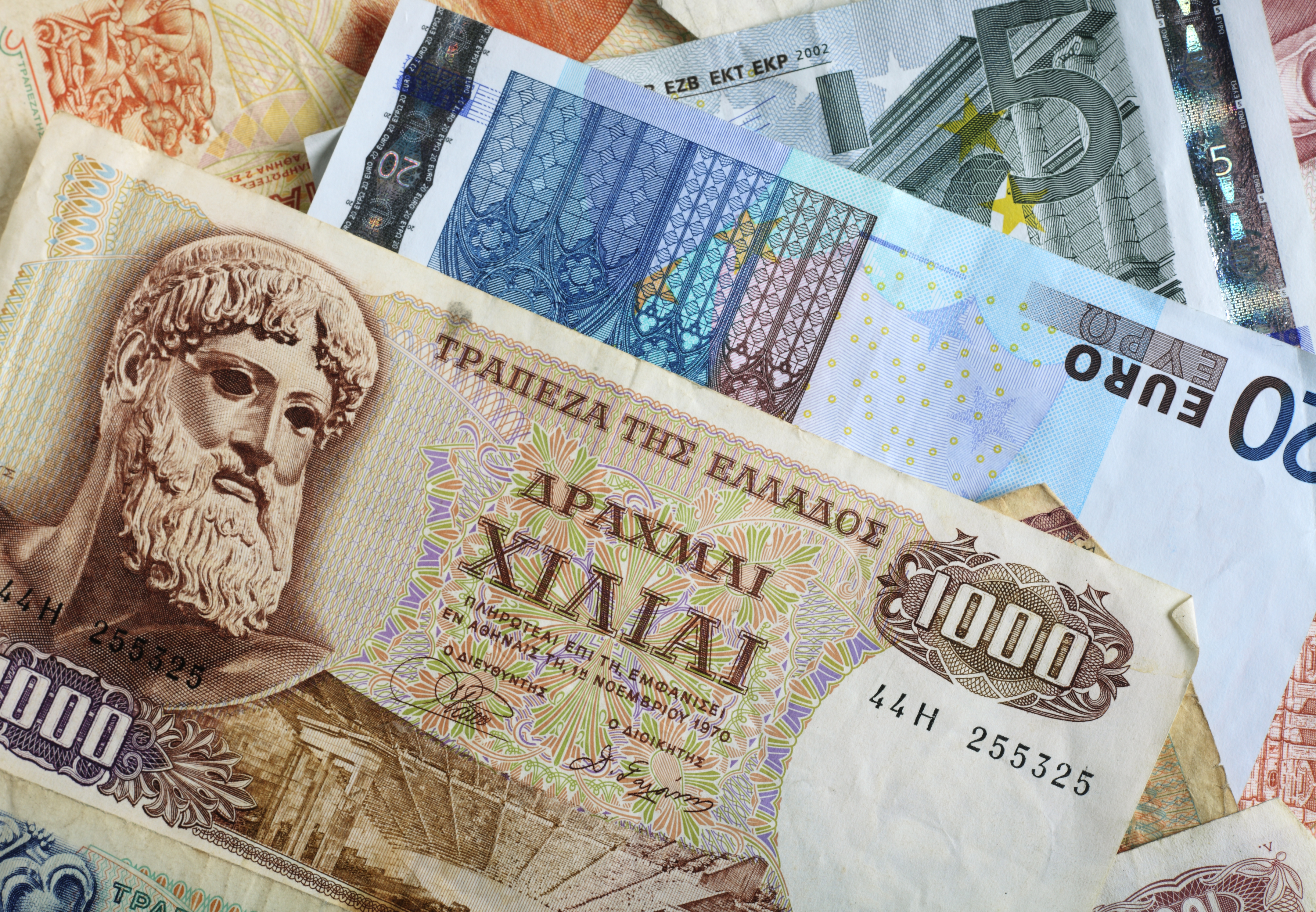
The high stakes drama in the Eurozone over Greece's financial mess has generated a lot of ink, some of it spilled here and here. While Greece and its Eurozone creditors once again went to the precipice and looked over the edge, they once again didn't like what they saw and found a way to pull themselves back from the brink. There will undoubtedly be fascinating volumes written about the brinksmanship of the first half of 2015; ascent of Alexis Tsipras and his Syriza government to power in Athens on a wave of anti-austerity populism; his July 5 referendum gambit for negotiating leverage, eventual capitulation to more austerity on worse terms than he could have had two weeks prior, and even new reporting that renegade Syriza Party members, unhappy with the capitulation, were plotting a kind of financial coup. All of it may yet cost Mr. Tsipras his job.
Yet, as I noted in my June 23 post, the Greeks faced two horrible choices; default and eventual "Grexit" from the Eurozone, or additional austerity that would likely solidify Greece's position as an economic basket-case well into the foreseeable future. It seems that the closure of Greece's banks and the imposition of capital controls concentrated a lot of minds by giving Greeks a bit of a preview of the acute pain a "Grexit" might bring about. However, opinion remains divided (including, evidently, within Mr. Tsipras' governing coalition) over whether the best option for Greece might in fact be a "Grexit." But which path is actually worse? Grexit or austerity? The answer isn't so simple.
Last week was great week for the President of the United States (POTUS). It may indeed have been the best week of his entire presidency. With a little help from the Supreme Court of the United States (SCOTUS), President Obama may have finally cemented a legacy for himself as President beyond the historical significance of him being President at all. I have been not this President's biggest fan for a number of reasons; basically a lot of sizzle, but little steak. Yet, some credit must be given here. The President's legacy as having presided over some genuinely transformative change is now secure.
There is plenty of commentary out there about this, including the story linked above, but having watched all of this closely for the past several years, I wanted to add my two (rambling) cents:
Update.... June 28. Buckle up. Talks between Europe (Eurozone members and the IMF) and Greece have collapsed. Greeks have lined up at ATMs around the country trying to get at their savings. The Greek government has announced a banking holiday. Where this goes is anyone's guess....
As of today, it looks as though Greece and its international creditors (the IMF and Euro Area governments) have reached a tentative arrangement that will allow Greece to meet a June 30 debt repayment deadline, avoid default, and continue on its current path of digging itself out of a deep financial hole. Yet, as the parties to this mess rush toward each successive precipice, peer over the edge, and back away again, it's difficult to see a path forward in which crisis management in the Eurozone doesn't become the default mode of operation.
What's been missing from the frenzied efforts to deal with short-run crises is a real discussion about how to fix the institutional mismatches in the Eurozone that contributed to the pickle Greece finds itself in. Assume Greece finds a way to stay in the Euro Area and dig itself out of the hole. What then?
The U.S. Senate is today expected to pass a measure granting President Obama the Fast-Track authority he has been seeking. Yet, it's very much a pyrrhic victory for the President since the final measure will reach his desk without Trade Adjustment Assistance. The Senate measure relied heavily on support from the GOP, most of whom are opposed to TAA, and many of whom have spent the better part of Obama's presidency opposing nearly everything he puts on the table. Only 13 Senate Democrats supported the bill, one the President had invested considerable time personally lobbying lawmakers.
Two other trade-related measures will be considered later this week, including Trade Adjustment Assistance, likely to be attached to an extension of a trade preferences measure for Africa. As noted below, TAA was considered separately from Fast-Track because Congressional Leadership thought it would be easier to thread together different coalitions in support of each (itself a sign of the modern challenges of trade liberalization). We'll see if this was wise, since TAA was historically seen as a way of "purchasing" additional openness by compensating the "losers" from liberalization.
This face-saving "compromise"in the Senate reinforces the challenges of contemporary trade liberalization and the strange coalitions that need to be put together to make it work. Making sense of it all requires one to tap their inner contortionist.....
Remember,..... this fight is just about authorizing negotiations. A huge fight remains if and when the President seeks Congressional approval of what he's done..... Buckle up!!!!
Some of you may be familiar with the Monkey Cage, a scholarly blog run by the Washington Post that looks at current events through the lens of Ivory Tower research. I'm a fan, and have a link to the Monkey Cage in my blog list to the right.
In early May, Nicholas Sambanis (Yale University) and Ioannis Galariotis (Athens University) posted a very interesting take on the Greek financial crisis that looked at what was going on through the lens of contemporary International Relations theory (link here). I have written a thing or two in this blog about the Greek mess and there will be several cliffhangers in the summer of 2015 to keep us awake at night, the first of which comes June 5 when Greece is scheduled to make a 300 million Euro debt service payment to the International Monetary Fund (see link). Europe is having a rough go of it these days. In addition to the prospect for a Grexit, many Euro Zone economies are in serious trouble, and Britain has just returned David Cameron's Conservatives to power, in part, on a promise to hold a referendum on the UK's membership in the European Union by 2017. One barometer for some of the public anxieties over Euro Zone economies can be seen in the street demonstrations outside ECB headquarters in Frankfurt earlier this year and the April assault on ECB President Mario Draghi.
There was a political earthquake in Alberta this week as Rachel Notley and the New Democratic Party ended 44 years of Tory Party dominance in Alberta. The excitement (shock for many) of victory now turns to the even larger challenge of actual governance. Premier Notley has yet to announce who will hold some of the most important portfolios in the new government, but there are several posts that will be important where the United States is concerned; Energy, Environment, International and Intergovernmental Relations (IIR), and the Premier herself.
For this blog post, I thought I'd imagine what I'd say if Premier Notley were to call seeking some advice on how to engage the United States (my invoice is in the mail).
As many of you who read this blog know, I am a big fan of the Federalist Papers, a series of newspaper articles written by John Jay, Alexander Hamilton, and James Madison in between October 1787 and August 1788 at the height of the debate over ratification of the U.S. Constitution. Two of the most important of these are the Federalist 10 and 51 in which James Madison outlines both the challenges of designing government (No. 10) and then (along with Hamilton) offers his prescription for doing so (No. 51).
For those who care to read these two documents, the seeds of the supposed paralysis in the American political system can be found. The (in)famous separation of powers that sets up the brutal competition for authority among the three branches of government is-- brace yourselves-- all by design!!!!! I happen to be a fan of this design, in part because of its frustrating ability to short-circuit the "mischiefs of faction" (No. 10) and thwart the concentration of power (No. 51).
One area in which the interbranch competition has frustrated many Americans is with respect to the War Powers. The so-called "Enumerated Powers" of Article I, Section 8 of the U.S. Constitution clearly states that the Congress has the sole power to declare war. Yet, Madison's division of labor over most issues in the design of the Constitution also assigns the responsibility of "Commander in Chief" of the armed forces to the President in Article II Section 2. While the Constitution manages to distribute a range of authorities across the three branches in ways that set up competition, that competition is a little different where the War Powers are concerned; Congress regularly capitulates to the President.