Good grief! Can things get any worse for the Obama Administration? This morning, Defense Secretary, Chuck Hagel resigned after less than two years on the job. Many will recall that he more or less limped into the job after being roughed up pretty severely by his former colleagues during his Senate confirmation hearings. As a result of that lacklustre reception, many believe Hagel deliberately took a back seat on national security matters to people like Secretary of State, John Kerry or the Chair of the Joint Chiefs of Staff, Martin Dempsey.
Things are not going swimmingly anywhere at the moment. In addition to all of the existing problems on the President's plate (ISIS, Russia-Ukraine, Afghanistan, etc), Benghazi continues to fester (with only a little help from Republicans, a la Whitewater in the 1990s). More seriously, it was also announced that nuclear talks with Iran remain at an impasse and that the deadline for completion will be extended once again, this time to July 2015.
Back in May, I wrote about Presidential Doctrines and suggested they were difficult things (link here). Foreign policy is messy, and it's not hard for a president to be called out for inconsistency over them. Moreover, that alone is probably the main reason such Doctrines are seldom coined by presidents themselves. It was all a small asterisk next to my joining the bandwagon of critics who were taking shots at Obama's foreign policy. Tell-all books by former officials are a robust cottage industry at the best of times. But the list of those throwing this particular Commander-in-Chief under the bus is both long and distinguished; Robert Gates, Hillary Clinton, Leon Panetta have all had unflattering things to say. I expect Chuck Hagel will soon be dishing on a book tour of his own.
Hence, with this morning's news about Hagel's resignation-- quite obviously encouraged by POTUS himself-- it is hard to craft an interpretation of Obama's foreign policy that doesn't conclude it's in near free fall. Who in their right mind would accept the President's nomination to be Hagel's replacement? The President will, of course, find someone. But who ever it is will receive a rough ride from a GOP majority in the U.S. Senate still smelling victory vapours following their midterm wins earlier this month.
Asterisk removed! Obama is in Carter-land!
Monday, 24 November 2014


Sunday, 23 November 2014
POTUS Gets 3 Pinocchios
Anyone that regularly reads the Washington Post knows that they have a group of staffers fact-checking the various distortions of fact used by public officials. To be fair, many such distortions are actually laudable efforts to simplify complex issues into more digestible component parts. In other instances, such oversimplifications cross the line into distortions so large that they deliberately mislead the public. Part of the problem is that which of these one sees in the pronouncements of public officials is often in the eye of the beholder. The Washington messaging machine is in a constant spin-cycle where, too often, coming up with a clever-- but too frequently disingenuous-- sound bite for the 24 hour news cycle is all that really matters.
This weekend, the Post decided to fact check some of President Obama's claims regarding the merits of the Keystone XL pipeline. Many of you know that the Keystone XL debate heated up again last week as both the House and Senate took up measures supporting the line's construction (see my post on this). As many of you also know, the key measure under consideration was taken up in the Senate and ultimately defeated 59-41(link).
Yet, in many ways it was comments by President Obama about Keystone XL made while he was in Asia that struck many observers because they suggested a strongly negative view of the merits of the project. The essence of his remarks was that Keystone XL was essentially a conduit through American territory for Canadian oil to be exported to overseas markets. Americans, he argued, would see few of the benefits. It is a line of argument that the Washington Post has called the President out on and issued him a dubious award of 3 Pinocchios out of 4 (see story here).
I think President Obama has lots of good reasons (politically) to hold off approval of Keystone XL. As I've argued in previous posts, Keystone is a small card he could play with Republicans on some other issue during his next two years as an increasingly lame-duck president. However, he doesn't help his own credibility on the issue by stooping to the same level of oversimplification as his political opponents. For a president that is often accused of being so deliberative that he is often indecisive, his simplistic statements on Keystone XL are both a bit of a surprise and indicator of the steep political hill Keystone XL still needs to climb.
3 Pinocchios!!!! Nicely done, Mr. President.
Monday, 17 November 2014
Tombstones, Cornerstones, and Keystones, Oh my!
This morning Stephen Blank and Monica Gattinger of the University of Ottawa published a fantastic piece with the Canadian International Council about the Keystone XL debate. It's great because it puts the necessity of the Keystone pipeline in the context of the profound changes taking place in North American energy markets. I've noted a few of these changes in earlier posts, but Blank and Gattinger are far more thorough, laying them all on the table, including the big changes being initiated with Mexico's PEMEX. Together, they raise a number of critical questions about the future of the Keystone XL pipeline.
I've linked Blank and Gattinger here: Keystone XL: Tombstone or Cornerstone?
Blank and Gattinger wisely refrain from making predictions, but their piece reaffirms my own sense that Keystone XL will be a tombstone for the next president to deal with, perhaps sometime in 2017.
I've linked Blank and Gattinger here: Keystone XL: Tombstone or Cornerstone?
Blank and Gattinger wisely refrain from making predictions, but their piece reaffirms my own sense that Keystone XL will be a tombstone for the next president to deal with, perhaps sometime in 2017.
Saturday, 15 November 2014
Keystone about to be built?... Don't bet on it...
The Keystone XL pipeline issue was thrust onto the Washington political agenda again this past week, scarcely a week after the drubbing at the polls suffered by Democrats in the Congressional midterms. In a series of twists and turns that can only really be understood inside the Washington beltway, the Keystone XL pipeline project suddenly seems to have new life.... or does it?
I may have to eat some humble pie six months from now, but I don't think everyone should be getting too excited about this. Shovels are no closer to going in the ground this week than they were last week.
In fact, I predict that Keystone XL will still be on the next president's desk when he or she assumes office in January 2017.
Sunday, 9 November 2014
Is NAFTA a Dead Parrot?
Depending on when you decide to mark the occasion, the North American Free Trade Agreement (NAFTA) turned twenty years old this year. In last week's Edmonton Journal, former federal MP Rob Merrifield, and current Alberta Envoy to Washington, along with Congressman Bill Owens (D-NY) penned an op-ed piece extolling the virtues of the NAFTA at Twenty (link to story here). For Merrifield and Owens, the NAFTA has been a tremendous success and remains a golden opportunity for all three countries. I agree!
The problem with some of this happy talk about North America is that it increasingly resembles Monty Python's Dead Parrot skit (linked here). Like the shop-keeper who insists the parrot isn't dead, only resting, some advocates of North America seem stuck in a time-warp, unaware of how far away from the North American vision we've actually drifted.
The problem with some of this happy talk about North America is that it increasingly resembles Monty Python's Dead Parrot skit (linked here). Like the shop-keeper who insists the parrot isn't dead, only resting, some advocates of North America seem stuck in a time-warp, unaware of how far away from the North American vision we've actually drifted.
Thursday, 23 October 2014
COOL Compliance updated.....
In one of the first blog posts to this site, I wrote about Country of Origin Labelling (COOL) requirements imposed by Congress on a range of agricultural products sold in the United States (Link to that original post here).
As I argued in that post, COOL and similar measures are likely here to stay. However, I also noted that the World Trade Organization would soon rule on whether COOL provisions were being applied in a discriminatory manner that violated the WTO's rules. It has certainly been Canada's position (and Mexico's) that the way COOL was being applied was highly discriminatory. It seems the WTO agreed. Earlier this week, the WTO issued a Compliance Panel ruling that said COOL remained uncool; in 2012, the WTO's Appellate body reaffirmed the original 2011 finding that COOL was being applied in a discriminatory manner and called on the U.S. to bring it into compliance. The Compliance Panel assessed whether the U.S. has done so. It has not. (Link here to see dispute summary and documents).
Okay, now what?
Sunday, 12 October 2014
Potpuourri.... Presidents, Ebola, and ME Bedfellows...
I've started several posts in the past several weeks only to scrap them in the face of rapidly changing events. Indeed, the past several weeks have been both interesting and sobering. So, instead of a single topic here, I thought I'd mention several that have caught my attention:
1) Obama's Legacy. As most know, after November's midterm elections, President Obama will firmly enter "lame duck" territory-- if he wasn't there already. The volume of commentary on Obama's legacy can already fill bookshelves. Among the more interesting pieces is something that appeared in the Washington Post this past weekend by Arron David Miller, titled Barack Obama, the Disappointer in Chief. Among Miller's points is that absent a real national crisis it's actually very difficult to be a "great" American president. Americans want greatness from their leaders, were taken in by the soaring rhetoric of candidate Obama in 2008, but then were inevitably disappointed, in part, because there isn't a national consensus about whether sweeping change of any kind is necessary.
Miller's piece is worth reading on its own, but it reminded me of the difficult position presidential candidates are in when trying to appeal to the electorate. We are now familiar with the critiques of Obama, many of which I have tossed around in this blog; he's too deliberative, too professorial, indecisive, always seems to see every side of every issue. That's a luxury that university professors have that American presidents do not. For some, Obama is all sizzle and no steak.
Tuesday, 16 September 2014
How Sovereign will Scotland Actually Be?
POST REFERENDUM UPDATE
So, the Scottish independence referendum wasn't quite the nail-biter than everyone thought it might be. It was exciting for a while, but the "No" side walked away with a resounding victory (55% No, 44% Yes). However, it could turn out to be a a phyric victory for the "No" side if many of the 11th hour Constitutional reforms promised my Westminster are carried out. In effect, the UK would broadly become a much more devolved, federal-like constitutional monarchy. Stay tuned. Some of what is being bandied about could take a long time, possibly giving pause to some Scots in the "No" camps to re-think their decision.
However, one of the most interesting revelations to flow from the Referendum is actually in the minutes of this past summer's deliberations by the Bank of England's Financial Policy Committee. Central banks have become much more transparent in recent years, and this window in to the BOE's preparations for the financial uncertainty that would ensue after a "Yes" vote are particularly interesting. In short, the BOE would have flooded the UK with signifcant liquidity and strongly signalled to everyone that while a political decision had been made, there was no reason to panic since the negotiations to separate Scottish financial institutions from those in the rest of the UK would be years in the making. In other words, Keep Calm, Carry On!
Reports from central banks are usually a good cure for insomnia, but this one is worth a look (Financial Policy Committee Report, September 26, 2014).
____________
There's a little referendum taking place in Scotland on September 18 with huge implications for the future of Great Britain and the European Union. If you haven't paid attention yet, you should!
As the vote has neared, public opinion polling suggests it will be a white-knuckle affair. For a rundown of the debate over Scottish independence, you can do no better than the September 13 issue of The Economist. But what intrigues me most about this debate are the arguments over the financial arrangements that might be negotiated (or not) between a newly independent Scotland and what remains of the United Kingdom. As part of the debate, Scottish-based financial institutions like the Royal Bank of Scotland, have made it know they will likely pull up stakes and move their headquarters to London; makes sense given London's position in global finance. Yet, even more interesting is the debate over what currency the Scots will use in the event of an independence vote?
Perfect Foreign Policy Storm....
The past few months have not been kind to the Obama Administration. War (or what ever it is) in Ukraine, a dangerous Ebola outbreak that the World Health Organization says could infect 200,000 by the end of the year, and the alarming advance of ISIS through parts of the Middle East, ought to be more than enough to keep the President awake at night.
President Obama has certainly endured his share of criticism about his handling of foreign policy, in my view a lot of it justified. Recent events have ignited a firestorm of commentary, a lot of it more pointed and informed than anything I've pointed out. Last week, President Obama was at pains to emphasize that the campaign against ISIS would NOT involve American boots on the ground. Yet, the very next day, the CIA's assessment of ISIS's capabilities was revised significantly. ISIS is no rag-tag militia force. They are large (now estimated at 20-25K) well-financed, organized, and equipped, thanks in-part to the speed with which the Iraqi Army melted away from their US-supplied equipment. In testimony before the Senate Armed Services Committee today on Capitol Hill, the Chairman of the Joint Chiefs had to conceded that US boots could end up in the middle of some combat, even if only as a result of their advisory role.
The President's speech to the nation (in prime time) gave the impression that ISIS was a significant threat and that the ultimate goal of the US was to destroy ISIS; not just contain or degrade, but destroy. That's a lofty (unrealistic?) objective for military action restricted to the air.
The debate over whether Obama took his eye off the ball in Iraq, didn't intervene when he could have made a difference in Syria, or has had the US in retreat from foreign affairs generally will go on. However, as I think about the situation with ISIS in Iraq and Syria in particular, I keep coming back to an article that appeared in Foreign Affairs in February 2002 by Michael Scott Doran entitled "Someone Else's Civil War." It is a fascinating piece that walks through a centuries long struggle for political Islam's heart and soul. Doran's focus at the time was Osama Bin Laden and Al-Qaeda, but the piece can still be read with relevance today since ISIS is largely an even more radical off-shoot of Al-Qaeda. The gist of Doran's argument is that Bin-Laden attacked the United States on 9/11 in a shift of tactics in a broader effort to unite a larger cross section of the Islamic world against a common enemy; America. However, their real target was the authoritarian regimes dominating the region.
Gruesome and as ISIS's video beheadings of westerners have been, I am struck by the way in which they have shifted public opinion and motivated the Obama Administration to action in a region the President clearly wanted to be done with. Moreover, I have seen no explicit claim by ISIS that it is at war with the west. Indeed, their main fight has been with the Assad regime in Syria and they seem mainly to want a new Caliphate established anchored in and around Iraq.
I'm not saying the US should stand by and watch from afar while a centuries-long civil war grinds on. Moreover, the United States doesn't have a great track record of getting it right in a complex part of the world it seems to understand in the vaguest of terms. However, I am also among those stooges that thinks the US is indispensable in any effort to set things right. My main concern, like Doran's, is that the President isn't being straight with the American public about the level of engagement that actually be required to make a substantive difference. As Niall Ferguson so clearly argued in his 2004 book Colossus, the United States doesn't have the stomach for long-term overseas engagement, and as a result hasn't been very good at it. America got tired of the projects in Iraq and Afghanistan. It will be interesting to see whether America's stomach for engaging ISIS over the long-haul will become queasy too.
Wednesday, 27 August 2014
More POTUS and the Environment
I thought I'd write a quick post here to flag a piece in the New York Times about the Obama Administration's strategy on global climate change talks that loom over the next couple of years (link). Back in April, I wrote about and linked some pieces about the likely use of "executive power" or administrative authority to pursue some kind of global climate change deal (linked here).
As today's Times' story notes, any measure pursued by the President is, of course, going to upset Republicans already up in arms about what they regard as Obama's excessive use of executive authority (see story). Yet, it's important to note that the inter-branch tug of war over the president's use of the "executive power" given to him in Article II of the US Constitution goes back a long way. As students of American politics will know, the division of authority as laid out in the US Constitution was intentionally designed to set up these kinds of struggles (see Federalist 10 and 51).
A new climate accord concluded by the President will also generate howls from the US Senate (for now, controlled by Democrats). That body will be upset with Obama because of the Constitution's Article II requirement that the president present treaties to the Senate for formal ratification. Yet, a moment's reflection suggests the US Senate hasn't ratified all that many treaties (anyone remember Versailles?), and yet the US is a bound Party to all kinds of international conventions. In fact, presidents have been binding the United States to all kinds of conventions for years through Executive Agreements without the "advice and consent" of the Senate.
My bet is that Obama's pursuit of a climate accord intended to bind the US to certain goals will be big enough to push the debate over who has the proper authority (the executive branch or the legislative) to a head. Perhaps more importantly, where that legal battle goes will depend mightily on the American public and their views on the importance of dealing with climate change in the 2016 presidential campaign. I'd suggest that prospective candidates for President in 2016 brush up on this stew of issues since Obama looks poised to firmly plant this issue on the national agenda.
Stay tuned....
Monday, 25 August 2014
More Security Industrial Complex and Pearson Gong Show....
While I was away on a short vacation, two things grabbed my attention, both related to my previous post on the Security Industrial Complex.
1) The militarisation of local police.
......
UPDATE: It seems there is suddenly a lot of interest in this issue. Obama has ordered a review of federal policy regarding the armaments sold to local police forces (see story). The New York Times is now posting raw data via GitHub about local police purchases of surplus Defense Department equipment. Lots of big Excel spreadsheets, but quickly demonstrates the scale of these purchases.
.......
There are many questions flowing from the depressing set of circumstances in Ferguson, Missouri over the last few weeks. However, I have been struck by the evident level of surprise on the part of media commentators about the degree to which modern local police forces resemble Marine infantry units. There is actually a surprising amount of research on this issue, a lot of which sources the militarisation of local police to the post-Cold War blurring of domestic and international security. As the end of the Cold War seemed to unleash a barrage of non-state and transnational actors onto the international stage, they further blurred the already fuzzy distinctions between the domestic and foreign. Many states responded with their own blurring of previously bright lines between domestic law enforcement (justice system, investigation, incarceration) and the state's power internationally (diplomacy, military, intelligence gathering).
As a primer on how the 9/11 terrorist attacks on the United States accelerated that process, one can do no better than have a look at the 9/11 Commission Report, and Chapter 13's recommendations in particular. Homeland Security works more closely with local law enforcement than ever before, including through a national network of Fusion Centers that bring together multiple elements of America's security apparatus. Improving local law enforcement's capacity to act as a first line of defense against terrorist attacks, where ever they originate, has been a major objective of U.S. national security for quite some time. Making sure local law enforcement has the proper gear to respond is part of that (one local police force example linked here).
Hence, the fact that police forces in small communities like Ferguson, Missouri have a lot of new toys to show off, or that they get carried away with their displays of force, should surprise no one.
2) Pearson Airport Gong Show.
Given my academic interests, you can imagine that when I travel I am keenly interested in how border security functions. As I stand in line with everyone else, I like to observe how quickly the lines move, the new gadgets that are deployed to "expedite" the process, and even how well some of the trusted traveler programs speed (or not) passengers through the lines. I recently traveled through the US Customs pre-clearance facility at Pearson International Airport in Toronto. I have been going through US Customs at Pearson for many years, including many painful trips through the old Terminal 1. Without question, Pearson is a much more pleasant experience than it used to be.
Pre-clearance facilities across Canada vary considerably, likely owing to the sheer passenger volumes at each. As Canada's busiest airport and US pre-clearance facility, Pearson undoubtedly has unique challenges to overcome. There have been a number of innovations everywhere, including more straight forward ways of matching bags to passengers remotely rather than having to pick them up in the pre-clearance hall, present them to the officer with your customs forms, and then deposit them on another belt before going through security screening yet again. Under the old procedures, inexperienced passengers could be seen emerging from the whole process a frazzled, sweaty, mess.
Over the past couple of years, Pearson has implemented a number of new procedures, many of which were solid improvements. Yet, when I traveled through there last week, a new, supposedly simpler, and more automated, system of kiosks and lines had been put in place. I was stunned at how bad it was. I have not been in a more chaotic pre-clearance line since early 2002. The procedures themselves are not that different from those experienced travellers have seen in the past. But, the efforts at streamlining them at Pearson need a serious re-think. I'll be keen to see if they've work the bugs out next time.
3) Okay, There's a Third Thing....The Big Apple.
The occasion for my trip was a short vacation to the Big Apple. The flight was extraordinary. A beautiful early evening sunset. An approach that took us low down the Hudson River toward lower Manhattan. And then a sharp turn on final approach to LaGuardia Airport that offered a spectacular view of the World Trade Center site. I won't soon forget it.
Lower Manhattan and the recently opened 9/11 Memorial were on the tourist agenda a couple of days later. After all the emotional bickering and delays over what to build at that sight, I think they got it almost exactly right! Not everyone agrees. But, in my view, both above and below ground, it's solemn, beautiful, interesting, and impressive. Moreover, it has brought a life to lower Manhattan that, truthfully, didn't exist when the twin towers were still there. Check it out for yourself.
Subscribe to:
Posts (Atom)
Redefining the Floor....Down
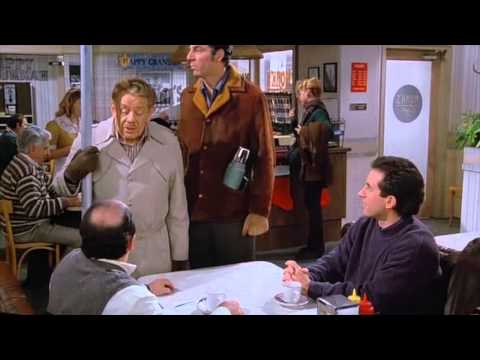
I was scrolling through some YouTube clips the other day and came across the great Seinfeld episode in which Frank Costanza invites Seinfeld...
-
 In the days since the text of the Trans Pacific Partnership was release, I and many others have been scouring the text looking for what'...
-
 So, we have a deal. But what's in it? Is the North American sky about to fall as I argued in my last post? Has the North American Idea b...